Mastering Solar Energy
What exactly is Rooftop Solar Technology?
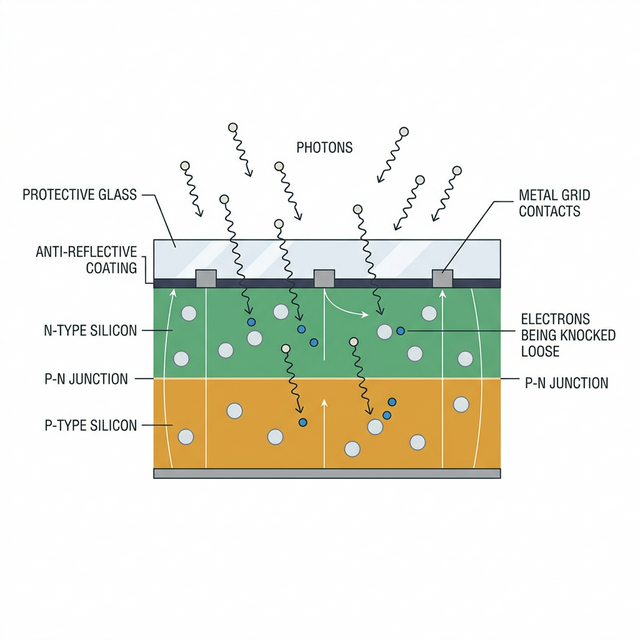
Solar Photovoltaic (PV) technology transforms sunlight directly into electricity using semiconductor materials. When sunlight hits a solar cell, it releases electrons, creating an electrical current.
Modern silicon-based cells are highly efficient, reliable, and designed to withstand extreme Indian weather conditions for over 25 years.
How Sunshine Becomes Power for Your Home
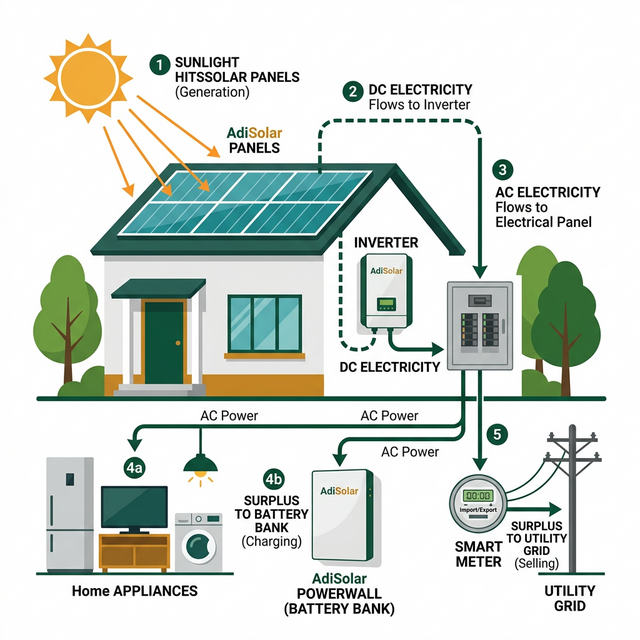
Absorption
Panels collect photons from direct or diffused sunlight.
Conversion
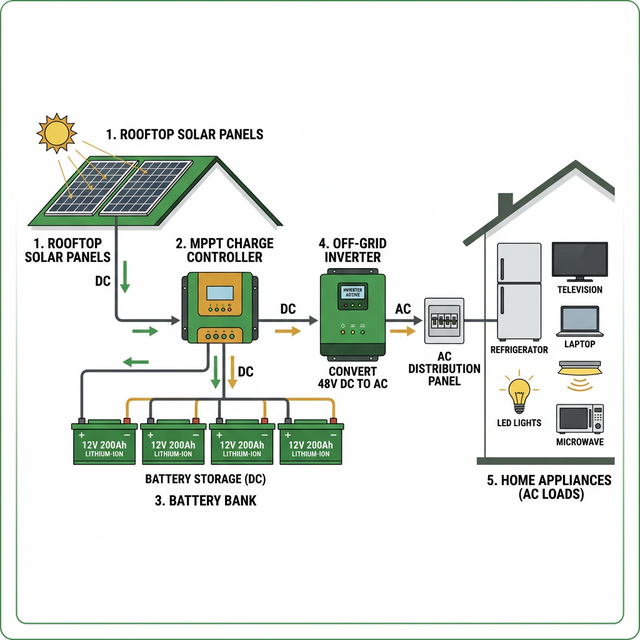
Inverters transform DC current into usable AC current.
Consumption
Priority is given to powering your home appliances.
Storage
Surplus is stored in modern LFP batteries (Hybrid systems).
Net Metering
Excess power is fed to the grid, earning you credits. Most customers save 60–90% from day one.
On-Grid vs. Off-Grid vs. Hybrid
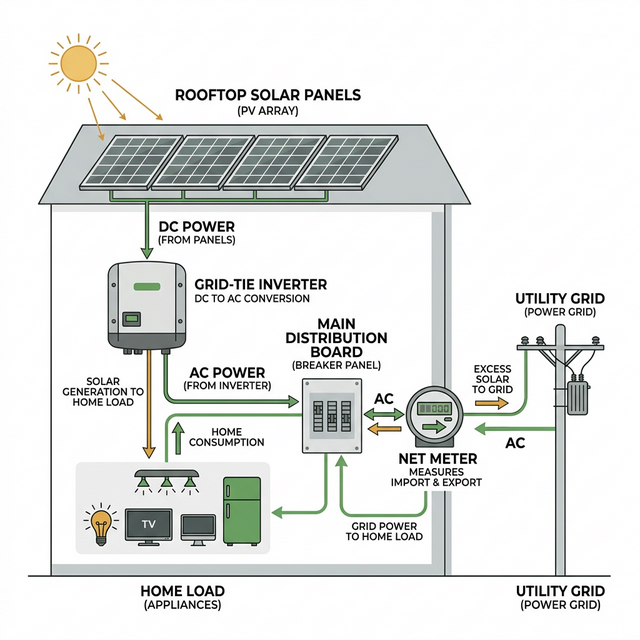
On-Grid Solar System
The most popular choice for urban residential and commercial users. It works in sync with the utility grid, allowing you to export surplus power and earn credits.
- Lowest upfront cost
- Net Metering benefits
- Maintenance free
- Fastest ROI
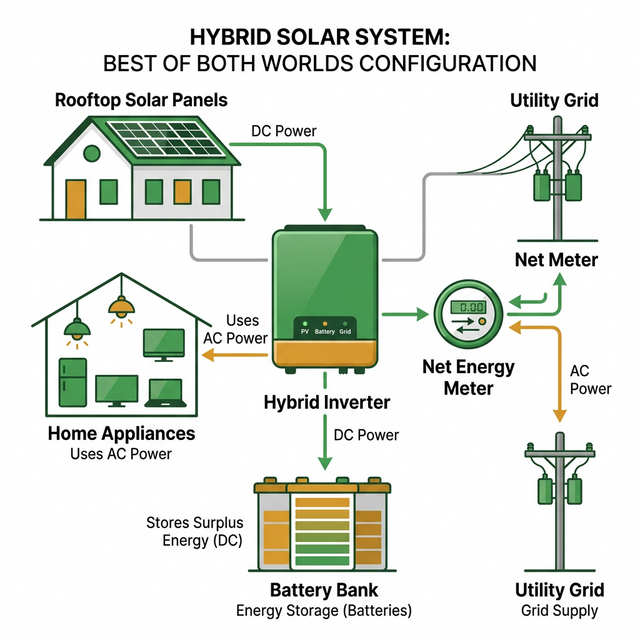
Hybrid Solar System
Combining the benefits of on-grid connectivity with battery backup. This system ensures your power stays on even during grid outages, while still supporting net metering.
- 24/7 Power Security
- Smart energy management
- Backup for critical loads
- Optimised savings
Off-Grid Solar System
Complete energy independence. Designed for remote locations where grid access is unavailable or highly unreliable. Uses large battery banks to store all generated energy.
- Total Independence
- Zero grid dependency
- Scalable battery storage
- Energy autonomy
The ROI of Switching to Solar
Drastic Bill Cut
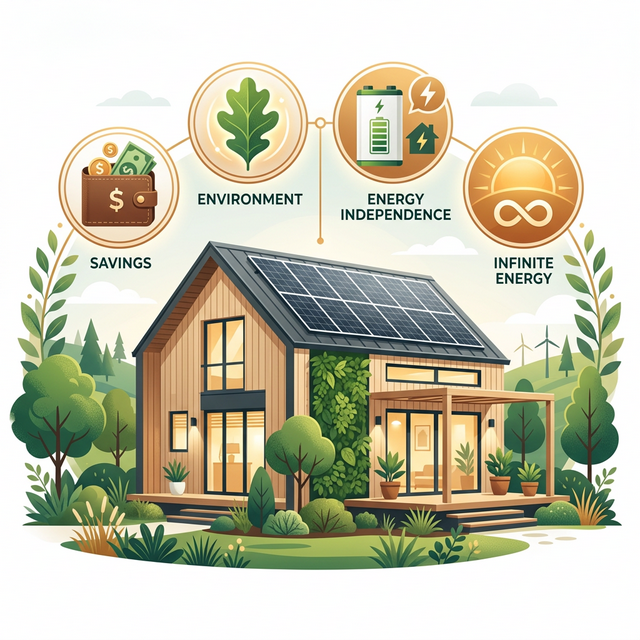
Reduce your monthly electricity expenditure by up to 90% from the very first billing cycle.
Property Value
Solar-equipped properties command a higher market value and attract premium buyers.
Environmental Legacy
Offset tonnes of CO2 every year. A 5kW system is equivalent to planting ~100 trees annually.
Solar Myths vs. Reality
Subsidies + Low EMI options make it accessible for everyone today.
No moving parts means only occasional cleaning is required.
Advanced MPPT inverters extract power even on overcast days.
Proper installation actually protects and shades your rooftop.
Hybrid systems store energy seamlessly for nighttime consumption.
Average Indian homes break even in just 4-6 years.
Claim Up to ₹78,000 in Direct Subsidies
The Government of India has launched the most aggressive solar subsidy scheme in history. Residential rooftops are now eligible for significant direct-to-bank refunds.
2024 Subsidy Structure
*AdiSolar handles the complete MNRE portal registration and document submission on your behalf.

Frequently Asked Questions
How much shadow-free area is needed per kW?
Typically, you need about 100 sq. ft. of shadow-free rooftop area per kW of solar installation. We assess this during our free site visit.
Can I run heavy loads like AC during power cuts?
With a Hybrid or Off-Grid system, yes. You can prioritise critical loads to ensure your AC or Geyser runs as long as the battery has sufficient charge.
Does rain or hail damage the panels?
No. Our panels use high-grade tempered glass designed to withstand heavy rainfall, hail, and high-velocity winds prevalent in India.
What is Net Metering?
It is a billing mechanism that credits solar energy system owners for the electricity they add to the grid. Your bill reflects only the 'net' power consumed.
How do I claim the government subsidy?
The subsidy is directly credited to your bank account after installation. AdiSolar manages the entire application process for you through the MNRE portal.
Do the panels need regular cleaning?
Yes, dust can reduce efficiency by 15-20%. We recommend a simple water wash every 15 days in dusty areas to maintain peak generation.
Still have questions?
Our energy experts are available for a one-on-one consultation.